What is breathwork? Every type, and what each one does
On this page
- The whole field on one page
- One dial: carbon dioxide
- A simple way to picture it
- Your body already does most of it
- Slow and calming: the brake
- Structured counts: something to hold on to
- Fast and activating: the gas pedal
- Connected breathing: the big experience
- Holds and breath training: letting it build
- Pranayama: the oldest map
- How fast is each one?
- What breathing on purpose can do
- What nobody has shown it can do
- The rules that never change
- The guide, chapter by chapter
- What changed since our old guide
- The simple plan
What breathing on purpose can and can’t doEvery breathing practice turns one dial, the carbon dioxide in your blood. Slow and steady calms you a little, every time, and five slow minutes a day is the best tested dose.
Breathwork is breathing on purpose to change how you feel. Every practice in it, from one long sigh at your desk to three hours of holotropic breathing on a mat, does one of three things to the carbon dioxide in your blood. It keeps it steady, drains it, or lets it build, and that decides what you feel. Slow breathing calms you a little, every time. Fast breathing revs you up, can take your mind somewhere strange and can knock you out, and none of it has been shown to cure a disease.
Search for breathwork and you get a list of twenty techniques, all treated as equal. Box breathing sits next to Wim Hof, 4-7-8 next to holotropic, alternate nostril next to a two-hour session with loud music and people crying on mats. The claims pile up the same way: more oxygen, alkaline blood, lower cortisol, a stronger immune system, a reset nervous system. Most of the practices are real, and some of the claims are too. But they don’t come as a package, and several of these practices push your body in opposite directions.
What we’d do
If you want to, and if you can, start with what your body already does for free. Breathe through your nose most of the time, move most days, and let a slow sigh out when stress spikes. How to breathe better naturally has the rest.
Then add five minutes of a slow pattern every day, sitting down. Start with cyclic sighing (two breaths in through the nose, one long breath out through the mouth), since it lifted mood more than meditation in the biggest head-to-head trial so far. That’s the daily practice, and the timer on this site runs it.
Try the big ones with your eyes open. Wim Hof rounds for a jolt, a holotropic workshop for the experience, on a bed or a mat, never in or near water and never in a car, with a trained facilitator for anything that lasts hours. Skip them if you’re pregnant or have epilepsy, heart disease or blood pressure you take medicine for.
If you remember three things
- Carbon dioxide is the dial. Keep it steady and you calm down. Drain it and you rev up. Let it build and you train the urge to breathe.
- Five slow minutes a day is the best tested dose. It takes the edge off stress by a small but real amount, and it’s free.
- The easy hold after fast breathing is the dangerous part. The alarm that makes you breathe goes quiet while your oxygen keeps falling, which is why water is off limits.
The whole field on one page
We sorted every practice people search for by what it does to your body, and they fall into five families. Yoga’s pranayama, the oldest system of all, has a practice in most of them.
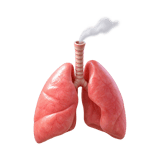
Fewer, slower breaths with a long out-breath. Your heart slows on every breath out.
Carbon dioxide Steady
A count to follow, with holds. Something to do with your mind as much as your lungs.
Carbon dioxide Steady, a little higher on the holds
Rapid or forceful breaths in rounds. Carbon dioxide falls, adrenaline rises, and you feel wired.
Carbon dioxide Falls
Deep breaths with no pause, for half an hour or more, often to music. The big-experience sessions.
Carbon dioxide Falls, for a long time
Breathing less, holding longer, or training the breathing muscles. Carbon dioxide is allowed to climb.
Carbon dioxide Rises
Yoga's breathing practices, thousands of years old. Most are slow, two of them are fast.
Carbon dioxide Depends on the practice
Each name opens its own mini guide, with how it’s done, where it comes from, what the studies found and who should skip it. The map of practices has all of them in one place, with how fast each one goes, how well it’s tested and how risky it is.
One dial: carbon dioxide
Your cells make carbon dioxide all day, and your blood carries it to your lungs. It’s also what your brain watches to decide when you breathe next. A small cluster of cells in your brainstem senses it, along with the acid it makes, and drives every breath. Oxygen barely gets a vote on an ordinary day, since your blood sits at 95 to 100 percent full on a pulse oximeter. oxygen.guide explains what that number means and why deep breaths barely move it.
That makes carbon dioxide the dial every practice turns. Slow patterns keep it near normal. Fast rounds and connected breathing drain it, and your blood turns alkaline within minutes. Holds let it climb until the urge to breathe gets loud. The chart shows how far the extremes go.
Why carbon dioxide runs your breathing has the chemistry, and how breathing changes your body has the rest of the science, from the brainstem to the heart.
A simple way to picture it
Think of a car with cruise control. It holds its own speed on the highway, and you never have to touch it. But you can put your foot on the brake or the gas any time, and the car answers right away. Take your foot off and the cruise control picks up where it left off.
Breathing is the cruise control. A slow out-breath is the brake. A run of fast, deep breaths is the gas, and if you floor it for a few minutes you get the tingling and the head rush. A breath hold is lifting your foot off both pedals on a hill. You can coast for a while, and the car slows the whole time whether you notice or not.
Your body already does most of it
The cruise control is good at its job. At a resting 12 to 18 breaths a minute, your brainstem runs somewhere between 17,000 and 26,000 breaths a day without asking you. It even does its own breathwork. You sigh about once every five minutes, which works out to 12 sighs an hour, and each one reopens tiny air sacs in your lungs that would otherwise slowly fold shut, UCLA scientists explained in 2016.
So the natural route comes first, if you want it and if you can. Breathe through your nose most of the time. Move most days, since the American Lung Association says regular exercise makes your lungs and heart stronger and you get out of breath less over time. Let a sigh out on purpose when stress spikes. None of that needs an app, a gadget or a class, and every practice below is something you add on top. How to breathe better naturally walks through each one.
Slow and calming: the brake
Your heart speeds up a little on every breath in and slows on every breath out. Slow down to about six breaths a minute and the swing between your fastest and slowest beat gets biggest, so a long out-breath spends more of every minute on the slowing side. Cyclic sighing, coherent breathing, the extended exhale, belly breathing and pursed-lip breathing all lean on that.
In June 2020, with COVID rules in place, a Stanford team ran the biggest head-to-head test so far, entirely at a distance. 108 adults did five minutes a day for 28 days of cyclic sighing, box breathing, fast rounds or mindfulness meditation. Everyone felt better after each session. Good moods rose more with the breathing, and only cyclic sighing was clearly ahead of meditation. On anxiety, meditation did just as well. The groups were 21 to 33 people each, and the authors call it exploratory.
One bigger trial found less. In a 2023 Sussex trial of 400 adults, breathing at 5.5 breaths a minute every day did no better than breathing on a pacer at a normal 12 a minute, when both groups expected it to help. Some of the calm comes from sitting down to breathe on purpose every day. We don’t think that’s a reason to skip it. Across 12 trials in 785 adults, breathing practices lowered stress by a small to medium amount, and five minutes costs nothing. Why does slow breathing calm your heart? has the mechanism.
Structured counts: something to hold on to
Box breathing (4 in, 4 hold, 4 out, 4 hold) and 4-7-8 give your mind a job, which is why police officers, soldiers and people who can’t sleep like them. The box count came out of police training in the 1980s, and a retired Navy SEAL commander, Mark Divine, gave it its name. Dr. Andrew Weil teaches 4-7-8 as four breaths at a time, at least twice a day.
Both are slower than people think. A box takes 16 seconds, so it runs at 3.75 breaths a minute, and 4-7-8 runs at about 3.2. That’s well under the six where the heart’s swing peaks. In the Stanford trial, the 21 people doing box breathing felt better, but not clearly more than the meditation group.
Fast and activating: the gas pedal
Wim Hof rounds, tummo, kapalabhati, bhastrika and breath of fire all move far more air than you need. Kundalini teachers describe breath of fire at two to three breaths a second. Carbon dioxide drains, adrenaline climbs, and you feel tingly, wired and wide awake.
The most famous study in breathwork came from Nijmegen, in the Netherlands, in 2014. Twelve young men trained for 10 days with Wim Hof in breathing, cold and meditation, and 12 didn’t. Then everyone got an injection of bacterial toxin that brings on a few hours of fever and aches. The trained men’s adrenaline shot up, their main anti-inflammatory signal ended up 194 percent higher, and their flu-like symptoms were milder. During the breathing, their blood oxygen dipped to around 50 percent for about 10 seconds in each round, and their blood pH reached 7.75 in some of them.
It’s a striking result, and it gets quoted for a lot more than it showed. The men trained in three things at once, and they faced one lab challenge, not a disease. In 2022 the same team pulled the parts apart in 88 men. The breathing on its own raised adrenaline, and breathing plus cold training calmed inflammation the most. A 2024 review of the method’s trials rated their quality very low.
Fast rounds are a jolt. In the Stanford trial they lifted mood about as much as the slow patterns did, and cut anxiety about half as much as cyclic sighing (1.81 points against 3.85). We’d use them now and then for energy, lying down. The timer on this site has no fast-rounds setting, and that’s on purpose. What happens in a fast breathing session? walks through each sensation and why people pass out.
Connected breathing: the big experience
Holotropic breathwork, rebirthing, Sudarshan Kriya and 9D sessions keep deep breathing going with no pause between breaths, usually to music, sometimes for hours. Stanislav and Christina Grof built holotropic breathwork at the Esalen Institute in California in the mid-1970s, when psychedelics were illegal, as a way back into the states his research had studied.
In 2025 a German team measured what actually happens. In 61 experienced breathers, carbon dioxide in the breath averaged about 20 mmHg across the session, against 37 in people breathing normally in the same room with the same music. On the questionnaire scientists use for psilocybin’s mystical experiences, the active breathers scored about the same as a standard dose. The lower their carbon dioxide went, the deeper the experience tended to be.
Nobody has shown yet that these experiences treat anything in the long run, and the people who sign up are already keen. Sudarshan Kriya has the most trials behind it. In 2022, 85 veterans with PTSD symptoms at a VA hospital in Palo Alto were assigned to it or to a standard talk therapy, and it did about as well on PTSD symptoms. If you want the experience, do it the serious way, with a certified facilitator, a health screening and a sitter beside you. A playlist and a dark bedroom aren’t the same thing.
Holds and breath training: letting it build
The opposite move is to breathe less. The Buteyko method, from a Soviet doctor in the 1950s, has people with asthma breathe lighter through the nose with short, comfortable holds. Small trials found they used less reliever inhaler, though their lung tests didn’t change. Freedivers use CO2 tables to get used to the urge to breathe. And a breathing trainer works the muscles instead. In a 2021 trial, 30 hard breaths a day through one for six weeks brought the top blood pressure number down from 135 to 126 in midlife adults. The BOLT test times your comfortable hold.
Holds come with one rule above every other. Never practice them in or near water. A CDC report on New York from 1988 to 2011 found 16 people who blacked out underwater from breath holding, and 4 of them died. All four were advanced or expert swimmers aged 17 to 22, and all four had hyperventilated on purpose first. What happens when you hold your breath? explains why it comes without warning.
Pranayama: the oldest map
Yoga worked out most of these families long before anyone measured carbon dioxide. Alternate nostril breathing, ujjayi and bhramari are slow, and kapalabhati and bhastrika are fast. Some of the old practices have turned up real chemistry. In 2002, researchers at the Karolinska hospital in Stockholm found that humming, the heart of bhramari, made the air from the nose carry 15 times more nitric oxide in 10 people, because the hum airs out the sinuses. Alternate nostril breathing lowered the top blood pressure number about 7 points across six small trials, though the trials disagreed a lot with each other.
How fast is each one?
Pace is the quickest way to see the families side by side. The calming practices sit well below a resting adult’s 12 to 18 breaths a minute, and the fast ones sit far above it.
What breathing on purpose can do
| What you want | What the studies show | Start with |
|---|---|---|
| Take the edge off stress | A small to medium drop across 12 trials in 785 adults | Cyclic sighing |
| A better mood | Cyclic sighing beat meditation on good moods in a month-long trial of 108 adults | Cyclic sighing |
| Lower blood pressure a little | 9 points with a breathing trainer in a six-week trial of 36 adults | Breathing trainer |
| Less breathlessness with COPD or asthma | A little less, and a better quality of life, across 73 trials with 5,479 people | Pursed-lip breathing |
| Less reliever inhaler with asthma | Small trials of the Buteyko method, alongside medicine | Buteyko method |
| A jolt of energy | Adrenaline roughly doubled after half an hour of Wim Hof breathing | Wim Hof method |
| A big inner experience | Psilocybin-like scores in experienced holotropic breathers | Holotropic breathwork |
What nobody has shown it can do
- Flood you with oxygen. Your blood is close to full of oxygen at rest, and fast breathing mostly blows off carbon dioxide. Breathing hard floods your body with oxygen has the long version.
- Alkalize your body as a health benefit. Fast breathing does make your blood alkaline for a few minutes, and that’s what causes the tingling and cramping. In children with absence epilepsy, breathing hard on purpose sets off a seizure in 87 to 100 percent of them.
- Raise your morning HRV. HRV jumps during a slow session, but a month of daily practice didn’t move resting HRV in two trials. A personal resonance rate did no better than a plain six a minute either. hrv.guide covers it.
- Boost your immune system in daily life. The Nijmegen result came from one lab challenge in trained young men.
- Treat an anxiety disorder or depression on its own. The effects are small, and the trials test breathing as a daily habit, not as a treatment.
The rules that never change
- Fast rounds, connected breathing and long holds: sitting or lying down only, on a bed, a mat or the floor.
- Never in or near water, and never right before swimming, diving or a cold plunge.
- Never driving, or anywhere passing out could hurt you.
- Skip fast rounds and long holds if you’re pregnant, or have epilepsy, coronary heart disease, a history of heart failure or stroke, or high blood pressure you take medicine for. That’s the Wim Hof Method’s own list.
- Long sessions go with a trained facilitator and a sitter, after a health screening.
- On slow patterns, lightheaded means you’re breathing too big or holding too long. Breathe smaller, shorten the holds, or switch to six a minute.
Who should skip which breathing exercises? has the whole list.
The guide, chapter by chapter
What changed since our old guide
Gyroscope’s first breathwork guide was written around the long, intense session and the app’s own guided sessions. Here’s what we no longer stand behind.
- The intense session isn’t the main event. The old guide called a 45 to 60 minute session “ideal for getting the full experience and the most benefits.” The best tested daily dose is five minutes of a slow pattern.
- “Alkalizes your blood” is a side effect. It’s real for a few minutes, and it’s what makes your hands tingle and cramp.
- Lower cortisol and inflammation aren’t proven benefits. In the Nijmegen study, the trained men’s cortisol was no different from the untrained men’s during the breathing, and the inflammation result came from one lab challenge.
- Tingling isn’t “a good sign”. Cramping “lobster claw” hands mean carbon dioxide fell a long way. Slow down and it passes. Tingling hands mean it’s working explains it.
- No readiness score. The old guide asked for a Health Score above 75 before starting. Nobody needs a score to do five slow minutes, and the safety list decides whether fast rounds are for you.
- No app tabs or live classes. The free timer on this site runs every slow pattern here.
The simple plan
- Let your body do the work, and help it for free. If you want to, and if you can, breathe through your nose most of the time, move most days so your heart and lungs get stronger, and let a slow sigh out when stress spikes. Your brainstem runs the other 17,000 or more breaths a day on its own. How to breathe better naturally.
- Do five slow minutes a day, sitting down. Cyclic sighing on the timer, or six a minute if breathing out through your mouth feels odd. That’s the dose that lifted mood in the Stanford trial.
- Keep a count for hard moments. Box breathing before a talk or a game, 4-7-8 in bed, and a sigh or two at your desk. Shorten the holds if you get lightheaded.
- Judge it on your mood, after four weeks. Rate how you feel from 1 to 10 before and after each session. Your morning HRV probably won’t move, and that’s normal. How to tell it’s working.
- Track it beside your nights. Do your sessions in any app that saves mindful minutes to Apple Health, or with the timer in Gyroscope, and Gyroscope One puts them next to your overnight HRV, resting heart rate, breathing rate and mood. After a month you can see if it's working for you. More on tracking it in Gyroscope.
- Try the big ones rarely, and safely. Wim Hof rounds lying down and a holotropic session with a trained facilitator, never in or near water or in a car. Skip both if you’re pregnant or have epilepsy, heart disease or blood pressure you take medicine for. Who should skip what.
- See a doctor about the breathing itself. New breathlessness, or breathing fast at rest with no clear reason, needs a doctor. Chest pain or severe trouble breathing needs emergency services. With asthma or COPD, breathing exercises go alongside your treatment, and if anxiety is stopping your days, talk to a doctor or a therapist as well.
31 sources
- Balban and others, Brief structured respiration practices enhance mood and reduce physiological arousal, Cell Reports Medicine, 2023pmc.ncbi.nlm.nih.gov
- Fincham, Strauss, Montero-Marin and Cavanagh, Effect of breathwork on stress and mental health: a meta-analysis of randomised-controlled trials, Scientific Reports, 2023pmc.ncbi.nlm.nih.gov
- Fincham, Strauss and Cavanagh, Effect of coherent breathing on mental health and wellbeing: a randomised placebo-controlled trial, Scientific Reports, 2023pmc.ncbi.nlm.nih.gov
- Shaffer and Meehan, A practical guide to resonance frequency assessment for heart rate variability biofeedback, Frontiers in Neuroscience, 2020pmc.ncbi.nlm.nih.gov
- Sumińska, Rynkiewicz and Szulczewski, Resonance frequency versus fixed 0.1 Hz breathing in HRV biofeedback: a four-week randomized comparison, Scientific Reports, 2026pmc.ncbi.nlm.nih.gov
- Cleveland Clinic, Blood oxygen level, updated 2022-02-18my.clevelandclinic.org
- Cleveland Clinic, Arterial blood gas (ABG), checked 2026-11-15my.clevelandclinic.org
- Cleveland Clinic, Vital signs, updated 2023-03-15my.clevelandclinic.org
- Citherlet, Crettaz von Roten, Kayser and Guex, Acute effects of the Wim Hof breathing method on repeated sprint ability: a pilot study, Frontiers in Sports and Active Living, 2021pmc.ncbi.nlm.nih.gov
- Vrdoljak, Bailey, Gibbons and Ainslie, Brain strain: blood flow and metabolism in environmental extremes, Experimental Physiology, 2026pmc.ncbi.nlm.nih.gov
- Kox and others, Voluntary activation of the sympathetic nervous system and attenuation of the innate immune response in humans, PNAS, 2014pmc.ncbi.nlm.nih.gov
- Zwaag and others, The effects of cold exposure training and a breathing exercise on the inflammatory response in humans: a pilot study, Psychosomatic Medicine, 2022pmc.ncbi.nlm.nih.gov
- Almahayni and Hammond, Does the Wim Hof Method have a beneficial impact on physiological and psychological outcomes in healthy and non-healthy participants? A systematic review, PLOS ONE, 2024pmc.ncbi.nlm.nih.gov
- 3HO International, Breath of Fire, checked 2026-11-153ho.org
- Stanislav Grof, History of Holotropic Breathwork, Grof Legacy Training, checked 2026-11-15grof-legacy-training.com
- Havenith and others, Decreased CO2 saturation during circular breathwork supports emergence of altered states of consciousness, Communications Psychology, 2025pmc.ncbi.nlm.nih.gov
- Bayley and others, Randomised clinical non-inferiority trial of breathing-based meditation and cognitive processing therapy for symptoms of post-traumatic stress disorder in military veterans, BMJ Open, 2022pmc.ncbi.nlm.nih.gov
- Santino and others, Breathing exercises for adults with asthma, Cochrane Database of Systematic Reviews, 2020pmc.ncbi.nlm.nih.gov
- Bowler, Green and Mitchell, Buteyko breathing techniques in asthma: a blinded randomised controlled trial, Medical Journal of Australia, 1998pubmed.ncbi.nlm.nih.gov
- Craighead DH and others, Time-efficient inspiratory muscle strength training lowers blood pressure and improves endothelial function, NO bioavailability, and oxidative stress in midlife/older adults with above-normal blood pressure, Journal of the American Heart Association, 2021pmc.ncbi.nlm.nih.gov
- Burge AT and others, Breathing techniques to reduce symptoms in people with serious respiratory illness: a systematic review, European Respiratory Review, 2024pmc.ncbi.nlm.nih.gov
- Boyd and others, Notes from the field: hazardous breath-holding behaviors, New York, 1988 to 2011, MMWR, 2015cdc.gov
- Weitzberg E and Lundberg JO, Humming greatly increases nasal nitric oxide, American Journal of Respiratory and Critical Care Medicine, 2002pubmed.ncbi.nlm.nih.gov
- Nam TG, Jeong H, Kim KH and Jang I, Effectiveness of alternative nostril breathing on blood pressure: a systematic review and meta-analysis of randomized controlled trials, Complementary Medicine Research, 2024pubmed.ncbi.nlm.nih.gov
- Ryan, Box Breathing, Police Magazine, 2017-01-04policemag.com
- Salvati and others, Respiratory alkalosis provokes spike-wave discharges in seizure-prone rats, eLife, 2022pmc.ncbi.nlm.nih.gov
- Andrew Weil, 4-7-8 Breath, Andrew Weil Center for Integrative Medicine, University of Arizonaawcim.arizona.edu
- Wim Hof Method, breathing exercises, checked 2026-11-14wimhofmethod.com
- Wim Hof Method, frequently asked questions, checked 2026-11-14wimhofmethod.com
- University of California, Los Angeles, Origin of sighing reflex in the brain pinpointed, ScienceDaily, 2016-02-08sciencedaily.com
- American Lung Association, Exercise and lung health, updated 2026-06-22lung.org