Breathing hard floods your body with oxygen
Short answerNo
On this page
No. At rest your blood is already 95 to 100 percent full of oxygen, so breathing hard can’t add much. What fast breathing really changes is carbon dioxide, which drops. That’s why your lips and fingers tingle, why your head feels light, and why a breath hold afterward feels so easy, even while your oxygen falls.
What we’d do
Stop thinking of breathing as a way to load up on oxygen. If you want to feel calmer, slow your breathing down. If you do fast rounds for the rush, know that the buzz comes from losing carbon dioxide, and that the hold afterward is when your oxygen really drops. Do it on dry land, sitting or lying down.
If you remember three things
- Your blood is nearly full of oxygen already. A healthy pulse oximeter number at rest is 95 to 100 percent.
- Breathing hard drains carbon dioxide. The tingling and dizziness come from that.
- The hold after fast breathing lowers oxygen. It feels easy because the urge to breathe is delayed.
Why it seems true
Air has oxygen in it, so more air should mean more oxygen. Fast breathing also feels like something powerful is happening. You get warm, your fingers buzz, your head goes light, and afterward you can hold your breath far longer than usual. “Oxygenating your body” sounds like the obvious explanation.
It’s like trying to fill a glass that’s already full. Pouring faster won’t make it any fuller, and the extra just spills over.
How full is your blood already?
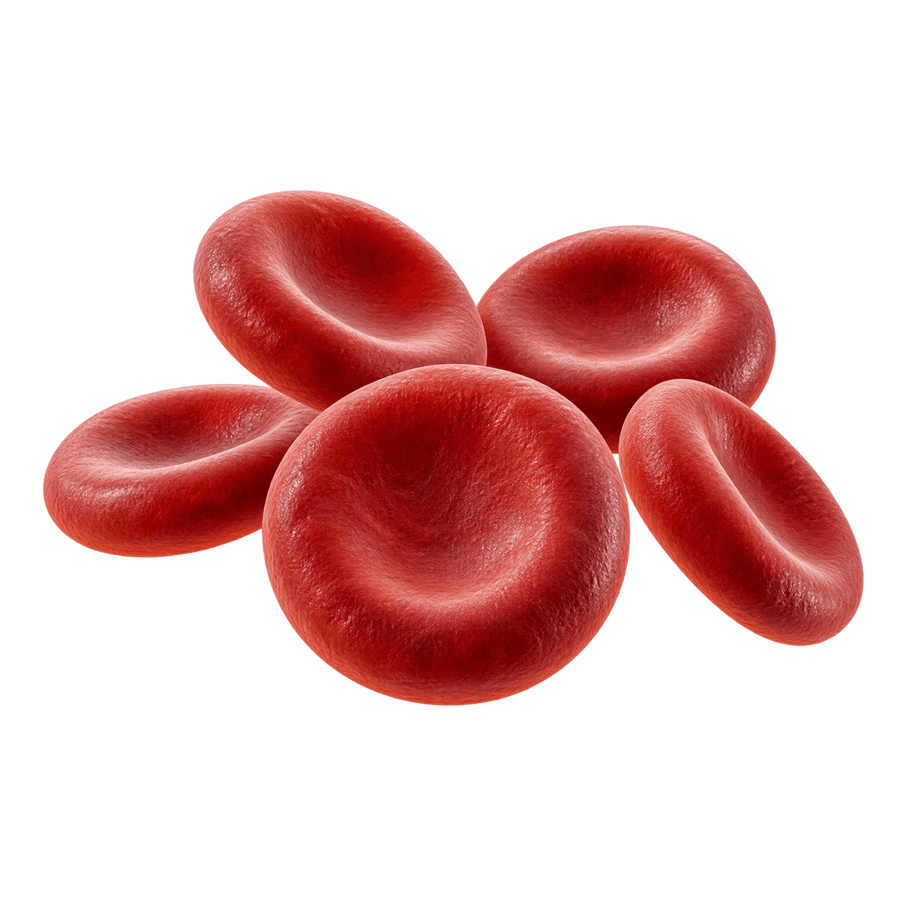
It’s very full already. Cleveland Clinic says a normal pulse oximeter result for most people is between 95 and 100 percent. That’s how much of the oxygen-carrying protein in your red blood cells is already loaded. Breathing harder can only nudge that last few percent, and for a healthy person at rest there isn’t much room left.
What breathing hard does change, fast, is carbon dioxide. Your body makes it all the time, and breathing gets rid of it. Breathe much more than you need and you clear it faster than you make it. Your blood turns more alkaline, a state doctors call respiratory alkalosis.
What low carbon dioxide does
- Your brain gets less blood. The blood vessels in your brain are very sensitive to carbon dioxide. When it falls, they narrow, and brain blood flow can drop a lot. The lightheaded feeling comes partly from that.
- Your nerves fire too easily. MedlinePlus lists numbness and tingling around the mouth and in the arms, and spasms in the hands and feet, as symptoms of low carbon dioxide. The Wim Hof Method’s own page says you may feel tingling in your fingers and feet.
- The urge to breathe goes quiet. The main alarm that makes you breathe responds to carbon dioxide building up. A 2006 review of breath holding lists low carbon dioxide as one of the things that makes a hold last longer.
What happens to oxygen during the hold
In 2014, doctors in the Netherlands studied volunteers trained in fast breathing with holds, cold and meditation. During the breathing exercises their blood turned alkaline, and they also had repeated bouts of hypoxia, meaning low blood oxygen. The pattern that people say floods you with oxygen ended up lowering it during the holds.
With carbon dioxide low, you keep holding while your body uses up oxygen, and the urge to breathe comes much later than normal. In freedivers, blackout is often assumed to come when oxygen saturation gets close to 50 percent. In a 2026 Swedish case report a diver lost consciousness at 51 percent.
On a bed, a short faint is usually harmless. In water it can lead to drowning, which is why the American Red Cross, the YMCA and USA Swimming warn about “hypoxic blackout” after hyperventilating, in any water at any depth.
Why do people feel good after?
Adrenaline is part of it. In the 2014 study, adrenaline in the trained volunteers’ blood rose sharply, and adrenaline makes people feel alert and buzzy. In the Stanford trial, a month of five-minute fast rounds lifted mood after each session about as much as slow patterns did. But it eased anxiety only about half as much as cyclic sighing. If calm is what you want, oxygen was never the point, and slow breathing does the job better.
More detail: can you raise your blood oxygen at all by breathing?
Only if it’s low to begin with, and that’s a medical question. Cleveland Clinic says to call your doctor if a home oximeter shows 92 percent or lower, and to go to an emergency room at 88 percent or lower. For a healthy person at sea level, the gap between 97 and 100 percent isn’t what’s making you feel calm, energized or anything else after a breathing session.
9 sources
- Cleveland Clinic, Blood oxygen level, updated 2022-02-18my.clevelandclinic.org
- Salvati and others, Respiratory alkalosis provokes spike-wave discharges in seizure-prone rats, eLife, 2022pmc.ncbi.nlm.nih.gov
- Vrdoljak, Bailey, Gibbons and Ainslie, Brain strain: blood flow and metabolism in environmental extremes, Experimental Physiology, 2026pmc.ncbi.nlm.nih.gov
- MedlinePlus, Hyperventilation, reviewed 2026-07-22medlineplus.gov
- Parkes, Breath-holding and its breakpoint, Experimental Physiology, 2006pubmed.ncbi.nlm.nih.gov
- Kox and others, Voluntary activation of the sympathetic nervous system and attenuation of the innate immune response in humans, PNAS, 2014pubmed.ncbi.nlm.nih.gov
- Mulder and others, Hypoxic blackout in dynamic apnea: a case report, Journal of Physiological Sciences, 2026pmc.ncbi.nlm.nih.gov
- Bart, Murray and Lau, Shallow water blackout, StatPearls, 2026pubmed.ncbi.nlm.nih.gov
- Wim Hof Method, breathing exercises, checked 2026-11-14wimhofmethod.com