How to breathe better naturally, with no app or gadget
On this page
You don’t need an app, a gadget or a class to breathe better. Your brainstem already runs every breath and even sighs for you every few minutes. If you want to, and if you can, the free moves do the most: breathe through your nose, move most days, let a slow sigh out when stress hits, and keep smoke out of your lungs.
Breathing has turned into something you buy. There are apps with subscriptions, mouth tape, nasal clips, breathing trainers, pacing gadgets and weekend workshops, and most of them start from the idea that you’ve been breathing wrong your whole life. Some of these things help a little, and one has a good trial behind it. But they all sit on top of a system that works on its own, and the biggest gains come from helping that system, which costs nothing.
What we’d do
Breathe through your nose most of the time, on walks and at your desk. Move most days, enough to get a little out of breath. When stress spikes, take two breaths in through your nose and one long breath out through your mouth. Don’t smoke. Add five minutes of a slow pattern on top if you like it, and leave the gadgets until you have a reason for one.
If you remember three things
- Your body already does breathwork. You sigh about 12 times an hour without noticing, and each sigh reopens tiny air sacs in your lungs.
- Exercise is the breathing workout. Regular exercise makes your lungs and heart stronger, so you get less out of breath over time.
- A slow out-breath is free. The pattern that did best in the biggest trial needs nothing but a clock.
Your breathing runs itself
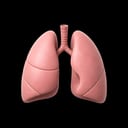
At rest, an adult takes 12 to 18 breaths a minute, according to Cleveland Clinic. That’s somewhere between 17,000 and 26,000 breaths a day, and you choose almost none of them. A small cluster of cells in your brainstem sets the pace. It watches the carbon dioxide in your blood and speeds your breathing up or slows it down to keep it steady. Why carbon dioxide runs your breathing has the chemistry.
It even runs its own maintenance. In 2016, scientists at UCLA and Stanford traced the sigh to about 200 brain cells in mice. A sigh starts as a normal breath, and before you breathe out you take a second breath on top of it, about twice the volume of a normal one. People sigh about every five minutes, which works out to 12 an hour, and each sigh reopens tiny air sacs in the lungs. Without one every five minutes or so, UCLA’s Jack Feldman explained, those air sacs slowly collapse.
Cyclic sighing, the practice that lifted mood the most in the Stanford trial, is that same double breath in, done on purpose and slowed down.
A simple way to picture it
Think of blinking. You blink all day without thinking about it, and it keeps your eyes wet. You can also blink on purpose when your eyes feel dry, and it helps right away. Nobody needs an app to blink.
Breathing works the same way. The automatic part does the job, and a few slow breaths on purpose help when you need them.
Breathe through your nose most of the time
Your nose filters, warms and moistens the air before it reaches your lungs, in Cleveland Clinic’s words, and your sinuses add a little nitric oxide on the way in. Your mouth is the backup, for hard exercise and a blocked nose. Breathing through your nose at rest, on walks and during slow practice is the default to aim for. Is breathing through your nose better? has the studies.
If your nose is blocked most nights or you snore loudly, see a doctor. Taping your mouth shut isn’t the fix. A 2025 review found 10 small studies of mouth taping, all of poor quality, and four of them warned of a risk of suffocation when the nose is blocked. Mouth taping explains why.
Move most days
Exercise is the breathing workout your body is built for. When you’re active, your heart and lungs work harder to get oxygen to your muscles. The American Lung Association says regular exercise makes your lungs and heart stronger, the same way it makes your muscles stronger, and that’s one reason you get less out of breath during exercise over time.
You don’t need a special breathing workout for this. A brisk walk counts. exercise.guide has how much exercise you need and whether walking is enough.
Let a sigh out when stress spikes
When you’re stressed, your breathing gets faster and higher in your chest without you choosing it. The quickest fix is the one your body already uses. Breathe in through your nose, sip in a little more on top, then let it all out slowly through your mouth. One or two of those take the edge off a stressful moment.
In June 2020 a Stanford team had 108 adults do five minutes a day, for a month, of cyclic sighing, box breathing, fast breathing or mindfulness meditation. Cyclic sighing lifted good moods the most, and it was the only one clearly ahead of meditation. It needs nothing but a clock with a second hand, or the free timer on this site.
Hum
Humming stretches your out-breath, which is the slow, calming part, and it does something stranger too. In 2002, researchers at the Karolinska hospital in Stockholm had 10 people hum, and the air coming out of their noses carried 15 times more nitric oxide than when they breathed out quietly, because the hum airs out the sinuses. Yoga calls it bhramari, the humming bee breath.
Keep smoke out of your lungs
The CDC lists lung diseases such as COPD among the effects of smoking. It says quitting lowers the risk of COPD and has health benefits at any age, “no matter how long or how much you have smoked”, and calls it “one of the most important actions people can take to improve their health.” Counseling and medicine both help people quit.
What you don’t need
- A paid app. The patterns with the best trials are a few counts long. A clock works, and so does the timer here. What’s the best breathwork app? goes through what to look for.
- Mouth tape. The evidence is poor, and it’s risky with a blocked nose.
- A gadget that paces you. When researchers pooled the blinded trials of breathing-pacer devices for high blood pressure in 2014, the devices did no better than listening to music or using a fake device.
The one gadget with a good trial is a breathing trainer, a handheld device you breathe in through against stiff resistance. In a 2021 Colorado trial, 30 hard breaths a day for six weeks brought the top blood pressure number down from 135 to 126 in midlife and older adults. It’s an add-on for blood pressure, and the free moves above still come first.
When the free moves aren’t enough
They come first, but they can’t fix everything.
- Asthma or COPD. Pursed-lip and belly breathing are taught by lung rehab teams to people with asthma and COPD, the American Lung Association says. They go alongside your inhalers and treatment, never instead of them. Pursed-lip breathing has the how-to.
- Anxiety that stops your days. Across 20 trials, breathing practice lowered anxiety by a small amount. It’s a good daily habit, and a doctor or a therapist can offer more. Which breathing exercise is best for anxiety?
- New breathlessness, chest pain, or fast breathing you can’t explain. MedlinePlus says breathing fast for the first time without knowing why may be a medical emergency. Call emergency services for chest pain or trouble breathing that doesn’t settle. Who should skip which breathing exercises?
- Loud snoring, or someone has seen you stop breathing at night. That’s a question for a doctor and a sleep study. oxygen.guide explains sleep apnea and what your overnight oxygen number means.
15 sources
- Cleveland Clinic, Vital signs, updated 2023-03-15my.clevelandclinic.org
- University of California, Los Angeles, Origin of sighing reflex in the brain pinpointed, ScienceDaily, 2016-02-08sciencedaily.com
- Li P, Janczewski WA, Yackle K and others, The peptidergic control circuit for sighing, Nature, 2016pmc.ncbi.nlm.nih.gov
- Balban MY and others, Brief structured respiration practices enhance mood and reduce physiological arousal, Cell Reports Medicine, 2023pmc.ncbi.nlm.nih.gov
- Cleveland Clinic, Nose: anatomy, function and related conditionsmy.clevelandclinic.org
- Lundberg JON and others, High nitric oxide production in human paranasal sinuses, Nature Medicine, 1995nature.com
- Rhee J and others, Breaking social media fads and uncovering the safety and efficacy of mouth taping, a systematic review, PLOS One, 2025journals.plos.org
- American Lung Association, Exercise and lung health, updated 2026-06-22lung.org
- American Lung Association, Breathing exercises for better lung health, updated 2026-06-22lung.org
- Weitzberg E and Lundberg JO, Humming greatly increases nasal nitric oxide, American Journal of Respiratory and Critical Care Medicine, 2002pubmed.ncbi.nlm.nih.gov
- CDC, Cigarette smoking, updated 2024-09-17cdc.gov
- Landman GWD and others, Efficacy of device-guided breathing for hypertension in blinded, randomized, active-controlled trials: a meta-analysis of individual patient data, JAMA Internal Medicine, 2014jamanetwork.com
- Craighead DH and others, Time-efficient inspiratory muscle strength training lowers blood pressure and improves endothelial function, NO bioavailability, and oxidative stress in midlife/older adults with above-normal blood pressure, Journal of the American Heart Association, 2021pmc.ncbi.nlm.nih.gov
- Fincham, Strauss, Montero-Marin and Cavanagh, Effect of breathwork on stress and mental health: a meta-analysis of randomised-controlled trials, Scientific Reports, 2023pmc.ncbi.nlm.nih.gov
- MedlinePlus, Hyperventilation, reviewed 2026-07-22medlineplus.gov