Every kind of breathwork, on one map
On this page
There are dozens of breathing practices, and they sort into six groups by what they do to your body. Slow ones calm you, counted ones give your mind a job, fast ones rev you up, connected ones can take you somewhere strange, and holds train the urge to breathe. Pranayama, yoga’s own system, has some of each. Every practice below has its own mini guide.
Most lists of breathing exercises give you ten names in a row, and you can’t tell which ones were tested, which ones are for calm and which ones can make you faint. Box breathing and the Wim Hof method end up side by side as if they did the same job. But box breathing slows you to under four breaths a minute, while breath of fire, as Kundalini teachers describe it, runs at two to three breaths a second.
How we’d pick
For calm, sleep or focus, pick one slow practice and do it five minutes a day for four weeks. Cyclic sighing has the best trial behind it, and coherent breathing, box breathing and 4-7-8 are fine if you like them better. For a jolt or a big experience, the fast and connected practices are real, but do them lying down on dry land, with a teacher for the long sessions, and skip them if your health rules them out. If you’re not sure, the quiz picks for you in a minute.
How fast each one goes
The quickest way to see the groups is by pace. A resting adult breathes 12 to 18 times a minute, which is the shaded band. Everything calming sits to the left of it, and everything activating sits far to the right.
The practices with no dot on the line have no set pace. Wim Hof rounds leave the speed up to you, holotropic breathwork asks only for breathing “faster and deeper than usual,” and the holds are about how long you don’t breathe at all.
The map
Each card opens the practice’s mini guide: what it is and where it comes from, how to do it (with the timer, for the slow ones), what the evidence shows, who should skip it, and what we’d do. The tags say how fast it goes, how well it’s tested and how risky it is.
Slow and calming
Fewer, slower breaths with a long out-breath. Your heart slows on every breath out. Carbon dioxide: steady.
 Cyclic sighing The physiological sigh Two breaths in through the nose, one long breath out through the mouth.
 Coherent breathing Resonance breathing, six a minute Five seconds in, five out, no holds. The pace where your heart swings most.
 Extended exhale Long out-breath breathing A short breath in and an out-breath twice as long or more.
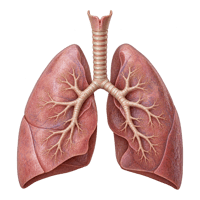 Belly breathing Diaphragmatic breathing Breathing low, so the belly moves and the chest stays still.
 Pursed-lip breathing In through the nose, out slowly through pursed lips. Taught for COPD and asthma.
Structured counts
A count to follow, with holds. Something to do with your mind as much as your lungs. Carbon dioxide: steady, a little higher on the holds.

Fast and activating
Rapid or forceful breaths in rounds. Carbon dioxide falls, adrenaline rises, and you feel wired. Carbon dioxide: falls.
 Wim Hof method Thirty deep breaths, a hold on empty, a recovery breath. Three or four rounds.
 Tummo Inner fire breathing A Tibetan practice of forceful breathing and visualization that raises body heat.
 Kapalabhati Skull shining breath Sharp pumps of the belly push air out, and the in-breath happens on its own.
 Bhastrika Bellows breath Forceful breaths in and out, like a blacksmith's bellows.
 Breath of Fire Kundalini yoga's quick, even breaths through the nose, in and out.
Connected breathing
Deep breaths with no pause, for half an hour or more, often to music. The big-experience sessions. Carbon dioxide: falls, for a long time.
 Holotropic breathwork Deep, fast breathing to loud music for two to three hours, with a sitter beside you.
 Rebirthing breathwork Conscious connected breathing Circular breathing with no pause between in and out, from the 1970s. Sudarshan Kriya SKY breath Cycles of slow, medium and fast breathing, taught in courses by the Art of Living.
 9D breathwork A recorded session of connected breathing over layered sound in headphones.
Holds and breath training
Breathing less, holding longer, or training the breathing muscles. Carbon dioxide is allowed to climb. Carbon dioxide: rises.
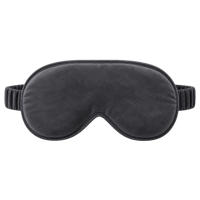 Buteyko method Breathing less and through the nose, from a Soviet doctor's asthma clinic.
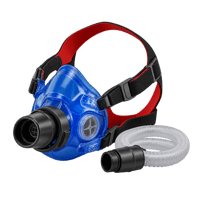 CO2 tolerance training CO2 tables, air hunger drills Holds with short rests, so you get used to the urge to breathe. Never in water.
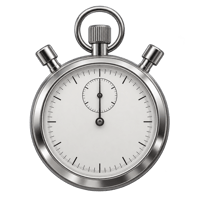 The BOLT test How long you can hold comfortably after a normal breath out.
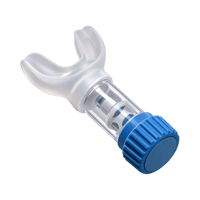 Breathing trainer Inspiratory muscle training Thirty hard breaths a day through a handheld device that pushes back.
 Nose breathing Breathing through your nose day and night, and what it does. Mouth taping Tape over the lips at night to force nose breathing.
Pranayama
Yoga's breathing practices, thousands of years old. Most are slow, two of them are fast. Carbon dioxide: depends on the practice.
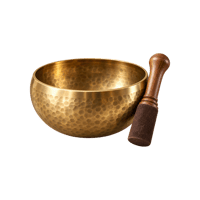 Alternate nostril breathing Nadi shodhana In through one nostril, out through the other, switching with your fingers. Ujjayi Ocean breath Slow breaths with the throat slightly narrowed, so they sound like the sea.
 Bhramari Humming bee breath A long hum on every out-breath, ears often closed with the thumbs.
What the tags mean
Tested is how much good evidence there is that the practice does what people use it for. Moderate means at least one decent randomized trial or a careful review points the same way, like cyclic sighing’s month-long trial of 108 adults or the asthma trials of the Buteyko method. Weak means small or short studies, often without a fair comparison group. Unknown means we couldn’t find a trial of the practice itself. Nothing here gets strong. Even the best breathwork trials are small next to the trials behind a blood pressure pill, and a 2023 review of the field found most studies had some risk of bias.
Risk is about what can go wrong for a healthy adult doing it as taught. Low is the slow practices, where the worst that usually happens is feeling lightheaded. Some is practices that change your blood chemistry or strain your body for a while. High is fast breathing with holds, and hours of connected breathing, where people can faint. The Wim Hof Method’s own FAQ tells people who are pregnant or have epilepsy, heart disease or blood pressure they take medicine for to skip it.
Timer means the timer on this site can run it. Only slow, safe patterns get one. There’s no timer for fast rounds or connected breathing, on purpose.
Which one for what
| You want | Try | Why |
|---|---|---|
| Calm, every day | Cyclic sighing | The best month-long result of any pattern |
| A pace to follow with a ring or watch | Coherent breathing | Six a minute is where your heart swings most |
| Something to count at a desk | Box breathing | Easy to remember under pressure |
| Help falling asleep | 4-7-8 breathing | A long hold and a longer out-breath, four breaths at a time |
| Less breathlessness with COPD or asthma | Pursed-lip breathing | Taught for lung disease, with no harm reported across 73 trials |
| A few points off your blood pressure | Breathing trainer | 30 breaths a day in the trials |
| A jolt of energy | Wim Hof method | Adrenaline up within half an hour, lying down only |
| A big inner experience | Holotropic breathwork | Hours of connected breathing, with a sitter |
The rules for every practice on this page
Anything fast, connected or held is done sitting or lying down, never in or near water, and never while driving. A CDC report on New York from 1988 to 2011 found 16 people who blacked out underwater from breath holding, and the 4 who died had all hyperventilated on purpose first. The slow practices are safe for nearly everyone, and if one makes you lightheaded, breathe smaller and shorten the holds. Who should skip which breathing exercises? has the full list, and how breathing changes your body has the science behind every group.
11 sources
- Cleveland Clinic, Vital signs, updated 2023-03-15my.clevelandclinic.org
- Balban and others, Brief structured respiration practices enhance mood and reduce physiological arousal, Cell Reports Medicine, 2023pmc.ncbi.nlm.nih.gov
- Fincham, Strauss, Montero-Marin and Cavanagh, Effect of breathwork on stress and mental health: a meta-analysis of randomised-controlled trials, Scientific Reports, 2023pmc.ncbi.nlm.nih.gov
- Shaffer and Meehan, A practical guide to resonance frequency assessment for heart rate variability biofeedback, Frontiers in Neuroscience, 2020pmc.ncbi.nlm.nih.gov
- 3HO International, Breath of Fire, checked 2026-11-153ho.org
- Telles, Singh and Balkrishna, Metabolic and ventilatory changes during and after high-frequency yoga breathing, Medical Science Monitor Basic Research, 2015pmc.ncbi.nlm.nih.gov
- Stanislav and Christina Grof, Principles of Holotropic Breathwork, Grof Transpersonal Training, checked 2026-11-15holotropic.com
- Wim Hof Method, breathing exercises, checked 2026-11-14wimhofmethod.com
- Wim Hof Method, frequently asked questions, checked 2026-11-14wimhofmethod.com
- Burge AT and others, Breathing techniques to reduce symptoms in people with serious respiratory illness: a systematic review, European Respiratory Review, 2024pmc.ncbi.nlm.nih.gov
- Boyd and others, Notes from the field: hazardous breath-holding behaviors, New York, 1988 to 2011, MMWR, 2015cdc.gov