Can breathing exercises lower blood pressure?
A little, at best, from slow breathing on its own. In blinded trials, slow breathing devices did no better than listening to music. A stiff handheld breathing trainer, 30 hard breaths a day, lowered systolic pressure (the top number) about 9 points in six weeks in one trial. Never change a blood pressure medicine because of either.
Slow breathing calms you down within minutes, so it’s easy to believe a daily session would bring your blood pressure down too. Devices that pace your breathing were made for exactly that. When researchers pooled the trials that compared them with a fair control, the effect went away.
What we’d do
Do slow breathing because it calms you. If you want a breathing tool that has moved blood pressure in a trial, ask your doctor about a breathing muscle trainer. Either way, measure your pressure at home before and after, and keep taking what you’ve been prescribed.
Slow breathing on its own
In 2014, researchers pooled the blinded trials of device-guided slow breathing for high blood pressure. The control groups listened to music or used a sham device, for 8 to 9 weeks. With individual data from three trials (105 people), the breathing device lowered office systolic pressure no more than the control did. The difference was 2.2 mmHg in favor of the control group, and it wasn’t significant either way.
Slow breathing still changes your heart in the moment. Your heart rate rises and falls with every breath, and your blood pressure sensors are part of that rhythm. The daily practice just hasn’t been shown to lower your average.
The trainer that did lower it
A breathing muscle trainer is a small handheld device you breathe in through against stiff resistance, like a hand grip for your diaphragm.
30 breaths a day
36 adults aged 50 to 79 with systolic pressure of 120 or more, six weeks (38 started). Craighead and others, Journal of the American Heart Association, 2021
Eighteen did 30 breaths a day, six days a week, against heavy resistance (75 percent of their maximum after the first two weeks). Their systolic pressure fell from 135 to 126 mmHg, and diastolic from 79 to 77. The comparison group did the same with a light 15 percent.
One small trial. About three quarters of the systolic drop was still there six weeks after they stopped.
It’s a real result from a sham-controlled trial, but it’s one small trial, and nobody has shown yet whether it holds up in bigger groups or over years.
Before you try it
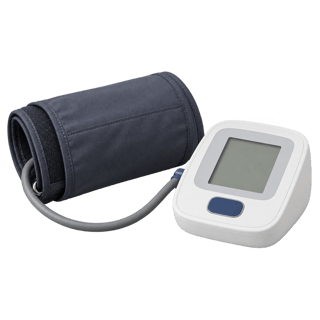
- Measure first. Take a week of home readings, then another week after six weeks of training. How to measure your blood pressure at home has the steps.
- Ask your doctor before using a trainer if you have heart or lung disease.
- Never stop or change a medicine because of a breathing practice. Talk to whoever prescribed it first.
The bigger things that lower blood pressure, from less salt to more walking, are on how to lower your blood pressure, and the free breathing moves that come before any device are on how to breathe better naturally.
Inspiratory muscle training has how the trainer is used in the trials and what happened after people stopped.
3 sources
- Landman GWD et al., Efficacy of device-guided breathing for hypertension in blinded, randomized, active-controlled trials: a meta-analysis of individual patient data, JAMA Internal Medicine, 2014jamanetwork.com
- Craighead DH et al., Time-efficient inspiratory muscle strength training lowers blood pressure and improves endothelial function, NO bioavailability, and oxidative stress in midlife/older adults with above-normal blood pressure, Journal of the American Heart Association, 2021pmc.ncbi.nlm.nih.gov
- Shaffer F, Meehan ZM, A practical guide to resonance frequency assessment for heart rate variability biofeedback, Frontiers in Neuroscience, 2020pmc.ncbi.nlm.nih.gov