How long is your comfortable hold?
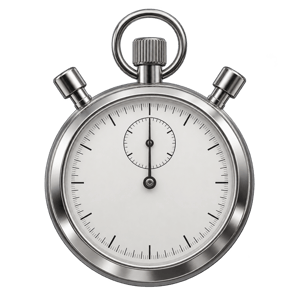
The BOLT test: a calm hold after a normal out-breath, stopped at the first clear urge to breathe.
Sitting down, on dry land. Never hold your breath in or near water.
- Sit for a few minutes and breathe normally through your nose.
- Take one normal breath in and let one normal breath out.
- Tap Start as the breath out ends, and pinch your nose if that helps.
- Tap Stop at the first clear urge to breathe or swallow. Don't push past it.
What your score means, and what to do next
- Under 20 seconds (very low or low). The urge to breathe arrives early for you. It's a measure of how comfortable your breathing is at rest, and it says nothing about your fitness or your lungs. Retest in a month, done exactly the same way, before you read much into it. If everyday things like stairs leave you short of breath, that's a question for your doctor, whatever the score.
- 20 to 40 seconds (moderate or good). A comfortable middle. Keep doing whatever practice you enjoy and retest once a month.
- Over 40 seconds (excellent). Nothing to chase. A longer hold isn't a fitter body, and pushing past the first urge turns this into a different and riskier test.
- Your scores jump around. That's common. Test seated and rested, at the same time of day, never after exercise or a strong coffee, and compare monthly averages.
Whatever your number, never practice breath holds in or near water. What happens when you hold your breath explains why the blackout comes without warning.
What the number means
The BOLT score times a comfortable pause, not a maximum. It stops at the first clear urge to breathe, long before the point where you'd have to gasp. A deeper breath first, a forced breath out or waiting past the urge turns it into a different test, so keep it the same every time.
The bands come from Gyroscope's benchmark page: under 10 seconds very low, 10 to 20 low, 20 to 30 moderate, 30 to 40 good, and over 40 excellent. They're coaching bands, not clinical cutoffs. When researchers tested 49 well-trained speedskaters in 2024, their BOLT scores had no link to their sprint and exercise test results. A physiology review in 2006 found breath holds vary a lot from person to person and aren't set by blood gases alone.
Retest once a month, seated and rested, never right after exercise or a strong coffee.
3 sources
- Gyroscope, the BOLT score benchmarkgyrosco.pe
- Parkes, Experimental Physiology, 2006pubmed.ncbi.nlm.nih.gov
- Kowalski and others, Frontiers in Physiology, 2024pmc.ncbi.nlm.nih.gov