How do I do box breathing?
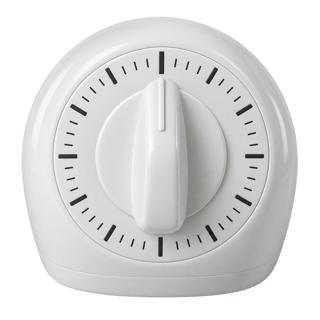
Breathe in through your nose for four seconds, hold for four, breathe out for four, and hold for four. Keep going for five minutes, sitting down. It’s easy to remember and fine for focus, but in the one trial that compared them, cyclic sighing did better. The timer below runs it.
Box breathing has the best reputation of any breathing exercise, mostly because it’s easy to explain. It has four equal sides of four counts each, and you can do it in a meeting without anyone noticing. People assume the most famous pattern must be the most tested one. It’s had one small month-long test, and it came in behind.
What we’d do
Use box breathing when you want something to count, at a desk or before a call, and shorten the holds if they make you uneasy. For a daily practice to take the edge off stress, we’d do cyclic sighing instead, since it beat meditation on mood and box didn’t.
Step by step
- Sit up in a chair with your feet on the floor. Breathe out all the way.
- Breathe in through your nose for a slow count of four.
- Hold the air in for four. Keep your throat and shoulders loose.
- Breathe out through your nose or mouth for four.
- Hold with your lungs empty for four, then start the next breath.
- Repeat for five minutes. That’s about 19 boxes.
One box takes 16 seconds, so the pattern runs at 3.75 breaths a minute. That’s far under the 12 to 18 you breathe at rest, and slower than the six a minute where your heart’s swing with each breath is biggest. If four counts feels long, use three. In the trial, people who could breathe out slowly for longer were given longer counts, up to eight to ten seconds a side.
Box breathing is like a slow walk around a block with a pause at every corner. The pauses are what make it different from plain slow breathing, and they’re the part to shorten if it feels hard.
What did the trial find?
In the 2023 Stanford trial, 21 people did box breathing for five minutes a day for 28 days. Their counts were set from a short breathing test at the start, at 3 to 4, 5 to 6 or 8 to 10 seconds a side. Their good mood rose, but not clearly more than the meditation group’s, while cyclic sighing was clearly ahead. Anxiety fell about the same in every group.
In a 2025 lab study, 84 students tried square breathing, 4-7-8 and six breaths a minute in one session each. Six a minute raised HRV more than square breathing did. None of the patterns changed mood in a single session.
Who should shorten the holds
If holds leave you lightheaded, anxious or gasping, cut them to two seconds or drop them and switch to six a minute, five seconds in and five out. Do the same if you’re pregnant or have heart disease or blood pressure you take medicine for. Short, comfortable holds sitting down aren’t the risky kind, but there’s no reason to push them. More in is holding your breath bad for you.
Box against the bedtime favorite is in box breathing or 4-7-8. To try other counts, put them into pattern speed.
For a full-screen session, the box breathing timer opens straight on the four-count. Box breathing has where the count came from, every study of it and who should skip it.
4 sources
- Balban MY et al., Brief structured respiration practices enhance mood and reduce physiological arousal, Cell Reports Medicine, 2023pmc.ncbi.nlm.nih.gov
- Marchant J et al., Comparing the effects of square, 4-7-8, and 6 breaths-per-minute breathing conditions on heart rate variability, CO2 levels, and mood, Applied Psychophysiology and Biofeedback, 2025pubmed.ncbi.nlm.nih.gov
- Shaffer F, Meehan ZM, A practical guide to resonance frequency assessment for heart rate variability biofeedback, Frontiers in Neuroscience, 2020pmc.ncbi.nlm.nih.gov
- Cleveland Clinic, Vital signsmy.clevelandclinic.org